
When you speak with Dirk van Asseldonk, one thing becomes clear fast. He’s not interested in grand narratives about innovation. He’s interested in the practical reality of turning scientific promise into something that actually reaches patients. And that mindset is exactly why he’s joining the Future of CGT parallel session on building for success.
If you’re working on a CGT program and trying to turn preclinical or early clinical data into a functioning business, this session is designed for you. Dirk has built companies before, led complex public–private initiatives, and now heads LentiCure, a gene therapy venture born directly out of the clinic. His experience bridges academia, industry, and government. More importantly, he has seen where things go wrong.
We asked him what founders and CGT teams need to understand to build something that survives beyond a promising dataset.
Where Academia Meets the Reality of a Company
Most CGT ventures begin inside academic hospitals. That starting point brings strengths, but also the kind of cultural friction that quietly slows programs down.
Academic teams are used to autonomy, long timelines, and scientific debate. Biotech requires cross-functional decisions, shared accountability, and deadlines that serve a purpose. Dirk has seen the gap up close.
As Dirk puts it, many teams begin “unconsciously incompetent,” not because they lack intelligence, but because they’ve never had to think like operators.
When a hospital-based team collaborates with an entrepreneurial structure, he adds,
“you need people to recognise where they are not the best, and where others are.”
For most early-stage CGT projects, that realisation marks the actual beginning of becoming a company.
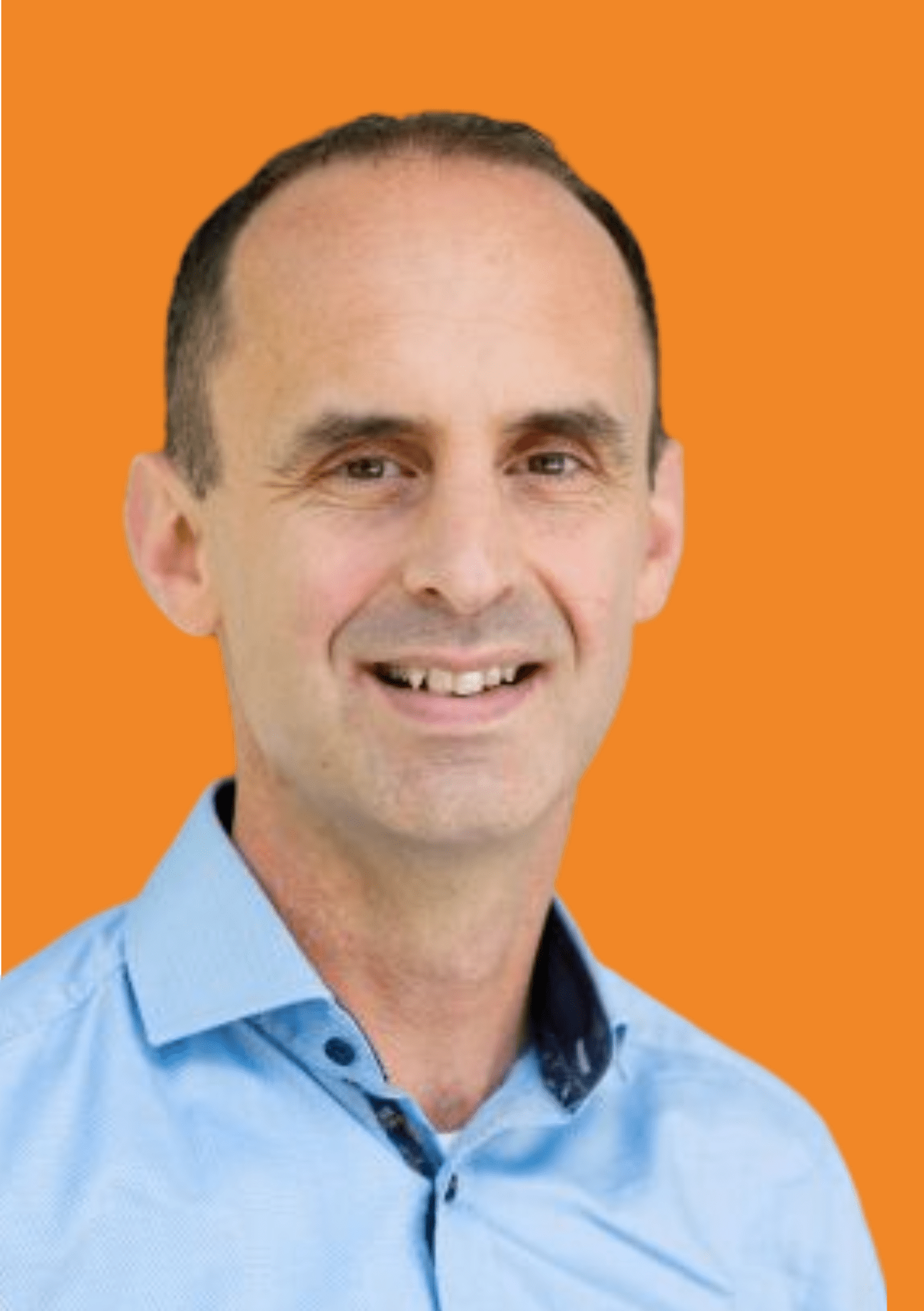
About Dirk van Asseldonk
Dirk van Asseldonk leads work at Lenticure focused on making cell and gene therapies more stable, reliable, and clinically practical.
His experience spans translational development and technical strategy, with a clear focus on enabling CGT programs to move from promise to real-world readiness.
“One hour of the right person saves you from six months of finding out what you didn’t know.”
CMC Is the First Test of Whether You’re Building for the Market
If there is a single theme Dirk returns to, it is the near-universal underestimation of CMC in gene therapy development.
In many young teams, the acronym barely registers in the early months. Meanwhile, the manufacturing, validation, and release testing demands of lentiviral or AAV therapies often consume as much budget as the clinical program itself.
Dirk doesn’t frame this as a warning. He frames it as an unavoidable structural reality. The smartest move, he says, is to bring in seasoned CMC leadership far earlier than founders think they need it.
Those specialists also bring the networks needed to select the right producers, avoid known pitfalls, and prevent costly replication of mistakes the industry has already solved.
In CGT, CMC maturity is the first indicator of whether a company is aiming for the market rather than a publication.
About LentiCure
LentiCure is reshaping how gene therapies reach patients. Built inside Erasmus MC, the company develops lentiviral treatments for severe rare diseases like Pompe, but with a model the industry rarely sees: therapies delivered at socially acceptable cost.
Instead of chasing the typical high-ROI biotech path, LentiCure combines academic discoveries with seasoned CMC, regulatory expertise, and entrepreneurship to create a scalable, hospital-embedded manufacturing approach.
The result is a blueprint for affordable gene therapy that health systems can actually sustain. LentiCure isn’t just developing a product but rebuilding the pathway that determines who can access advanced therapies, and at what price.
LentiCure
2023, Erasmus MC spin-out
Rotterdam, the Netherlands
Lentiviral HSPC gene therapy targeting rare monogenic diseases, with Pompe disease as the lead program.
Innovation in Clinical Design Only Works When You Can Defend It
The field often praises innovative trial design, especially in rare diseases where patient numbers are small and traditional studies are impractical. Yet almost no companies submit genuinely innovative protocols to regulators.
The reason, Dirk argues, is structural. Academic clinicians understand the disease. Industry veterans understand the regulator. And most early CGT teams rely too heavily on the former. Without an airtight rationale, statistical grounding, and strategic framing, even the strongest concept is dismissed before it’s discussed.
Dirk’s advice is simple: treat trial design as a strategic discipline, not a scientific side topic. Bring in the people who have stood in front of EMA dozens of times. Let them pressure-test your vision before it becomes your dossier.
Your Exit Isn’t Your End Goal. It’s the Patient.
Many early companies are built with their exit date in mind. Dirk has watched this pattern enough times to consider it one of the most common errors in CGT strategy.
If a buyer sees a program that needs to be rebuilt to achieve marketing authorisation or reimbursement, they will devalue it, delay it, or pass on it entirely. A poorly designed early pathway is not just expensive; it is also harmful. It’s slow. And speed is everything when a competitor is running parallel. Founders should think beyond phase 1 and 2 from the moment they design their first protocol. That doesn’t mean running phase 3. It means ensuring that whoever does can move quickly, without redoing foundational decisions.
A strong exit, Dirk argues, is the byproduct of work that already considers the patient at the end of the path.
Building for Success Means Building for the System
Lenticure, the company Dirk now leads, is experimenting with a model that challenges the economics of traditional CGT development: decentralised, hospital-embedded manufacturing aimed at reducing cost and friction. Whether others adopt this direction or not, the principle behind it resonates across the sector.
No company builds alone. Not in CGT. Not while regulators call for new models, hospitals push for sustainable pricing, and patient organisations demand faster access.
Dirk views collaboration as an operational necessity, not a philosophical ideal. Growth will come not from isolated innovation but from stronger alignment between developers, hospitals, regulators, and the broader ecosystem.
Why Dirk’s Session Matters
Dirk brings the kind of perspective that only comes from having built companies, corrected course after mistakes, and stepped into environments where science, public funding, and industry incentives collide.
For founders and CGT teams trying to turn data into a real business, his insights offer more than guidance. They offer clarity: this work is possible, but only with the right structure, the right people, and the right questions asked early.
