
In this conversation, Terri does not present development as a straight line from promising biology to a clinical trial. She describes it as a sequence of decisions under constraint: finite capital, evolving data, novel clinical context, and a clinical/regulatory pathway that has to be assembled as you go. If you are building an early CGT programme, operational discipline is the key to beating these challenges and making novel therapies a reality.
The timeline problem is never only a timeline problem
Terri’s first point is not about a single technical obstacle, but about compounded delay. “In advanced therapy development, everything always takes much longer than you think it’s going to.” That time reality immediately becomes a funding reality, because early programmes are planned around budgets that assume cleaner execution than the real world delivers for novel programmes.
If you are building a breakthrough therapy in a relatively new indication , she suggests you should expect additional hurdles. Rinri is focused on regenerative cell therapy for hearing loss, and she frames that as a shift in familiarity for clinicians, regulators, and partners. In that setting, development is not simply about following precedent. It is about building solutions while you build the pathway and the environment the technology needs in order to reach patients
She also emphasises robustness as a recurring stress test. Early processes often look workable until you push on repeatability and variability. When you scale expectations from “we can make it” to “we can reliably make it,” vulnerabilities surface and are addressed. In her framing, that is not failure; it is what development work actually is.
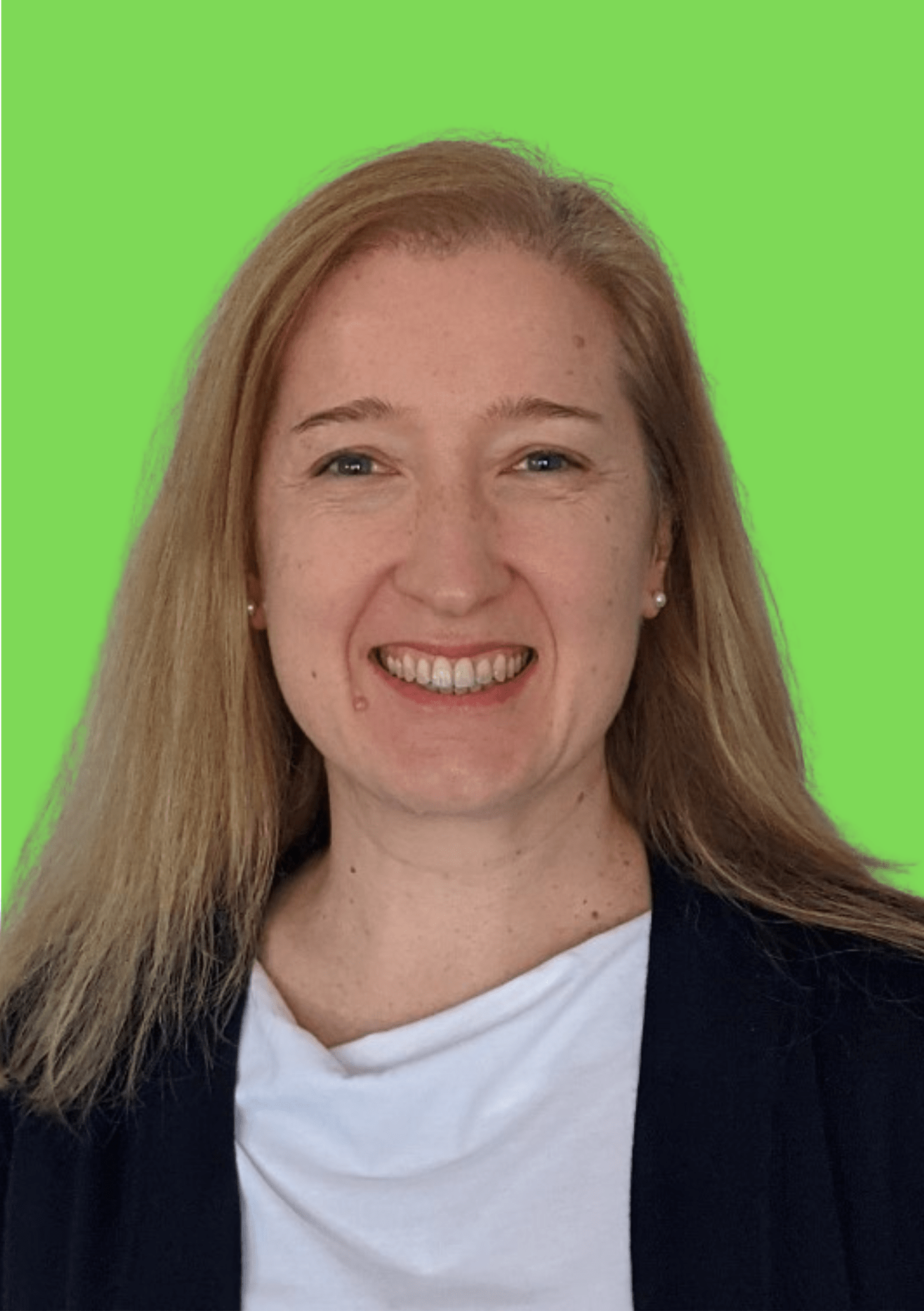
About Terri Gaskell
Terri Gaskell is Chief Technology Officer at Rinri Therapeutics. Her background is in stem cells and developmental biology, followed by industry roles and 7.5 years at the UK Cell and Gene Therapy Catapult (starting in 2013), where she worked across modalities, indications, regulation, and health economics. Over the last five years, she has helped build Rinri’s programme through process establishment, preclinical data generation, clinical trial application preparation, regulatory interactions, and clinical site set-up.
Challenge assumptions, then write down what you are assuming
Her advice to other teams begins with an uncomfortable habit: naming assumptions and interrogating them. “Try not to make assumptions.” She links this to a simple internal standard: what data supports what you believe, and what is still a placeholder belief dressed up as certainty?
For early teams, this is more than good scientific hygiene. Assumptions shape spending, timelines, and which risks you discover early versus late. Terri’s suggestion is to be explicit, document what you are assuming, and revisit it as knowledge changes. She is clear that early plans may become wrong plans, even if they were reasonable at the time.
That discipline extends to how you use external experience. She encourages teams to lean on the field’s willingness to share practical lessons within confidentiality limits. In her view, the point is not to find a perfect template. It is to not repeat avoidable mistakes and to find analogies to past problems that can help you frame the next step.
About Rinri Therapeutics
Rinri Therapeutics is developing a pluripotent stem cell-based therapy for sensorineural hearing loss. The company has moved through late preclinical work into clinical readiness, with clinical trial approval in place and clinical sites being prepared for recruitment. Its lead product is otic neural progenitor cell therapy Rincell-1, expected to enter the clinic shortly.
Rinri Therapeutics
2018
Sheffield, United Kingdom
Stem cell hearing restoration therapy
Align product, clinic, and patients before you submit
A central theme in the interview is early alignment across functions that are often treated as sequential. She describes seeking early scientific advice and early interaction with regulators. “We went for scientific advice (from the UK MHRA) quite early.” She connects that to Rinri’s relatively smooth clinical trial application approval process, suggesting that preparation reduced the need for rework after submission.
She also describes early clinical integration as a way to avoid a damaging disconnect. CMC design has to meet clinical handling expectations. Her message is that product design and clinical reality should be developed in parallel, not handed over at the end.
Patient engagement is another element she ties to readiness. She notes that regulators expect to see significant patient engagement. In her framing, this is part of building a trial programme that can recruit and retain, and that will stand up to scrutiny, generating the data needed to bring a novel product such as Rincell-1 to the market.
Keep the core team small, then bring in specialist expertise when needed
Terri describes Rinri Therapeutics as a deliberately small internal team supported by long-standing external expertise. She frames this as cultural and practical: cross-disciplinary openness inside the team, and collaboration outside it to fill gaps at the right time.
If you are building in a tight funding environment, she argues this model can be capital efficient. Salaries become a dominant cost line early, and hiring generalists to cover specialist gaps can be expensive and risky. Her view is that you can often access deeper expertise through part-time external support than you could attract as a full-time hire, especially at an early stage.
The operational point is simple: your internal team should be necessary and integrated, and your external network should be ready before you need it. That requires active relationship building, not last-minute procurement.
Why Terri’s session matters
Terri brings the kind of experience that is vital when you are facing the early development pathway: building process and preclinical packages, integrating clinical reality into CMC choices, using regulators early to avoid rework, and building a team model that is both lean and technically deep. Her perspective is focused on the decisions that determine how a first-in-class therapy like Rincell-1 reaches patients.
