What Comes After It Works: Frank Staal on Making Gene Therapy Reach Patients
Frank frames therapy development as a sequence of dependencies that teams often underestimate. In his view, it is not enough to have a convincing biological mechanism and a workable construct.
The question becomes whether the entire chain holds when you move from controlled conditions to a clinical setting, with real patients and real constraints. That is why he keeps returning to the importance of decisions that may look small early on, but become hard to change later.
For teams building a programme, his perspective can be read as a caution against treating translation as a separate phase you enter only once “the science is done.” The scientific work continues, but the nature of the work changes. You need earlier clarity on what your therapy needs to be, how it will be tested, and how it could move beyond the first small cohort once you have initial clinical results.
Proof is not only efficacy, but restored function
Frank is optimistic about what gene therapy can achieve in inherited disease, but he is careful about what counts as proof. He describes immune monitoring as a way to test whether the therapy does what it should do in the body, not only in a dish. That includes looking at whether patients regain immune cell populations, and whether that recovery holds over time.
His broader point is that translation requires discipline about what you measure and why. If you are designing a development plan, the implied question is: are you building the evidence package you will later need, or are you collecting results that look good but do not reduce clinical uncertainty? This is where his comments on models, monitoring, and patient variability meet. You can optimise assays, but if your model does not reflect what happens in the clinic, you may postpone the real complexity until it becomes expensive to address.
“Even though it is an extremely challenging journey, if it succeeds it is absolutely worth it, because you are truly curing patients.”
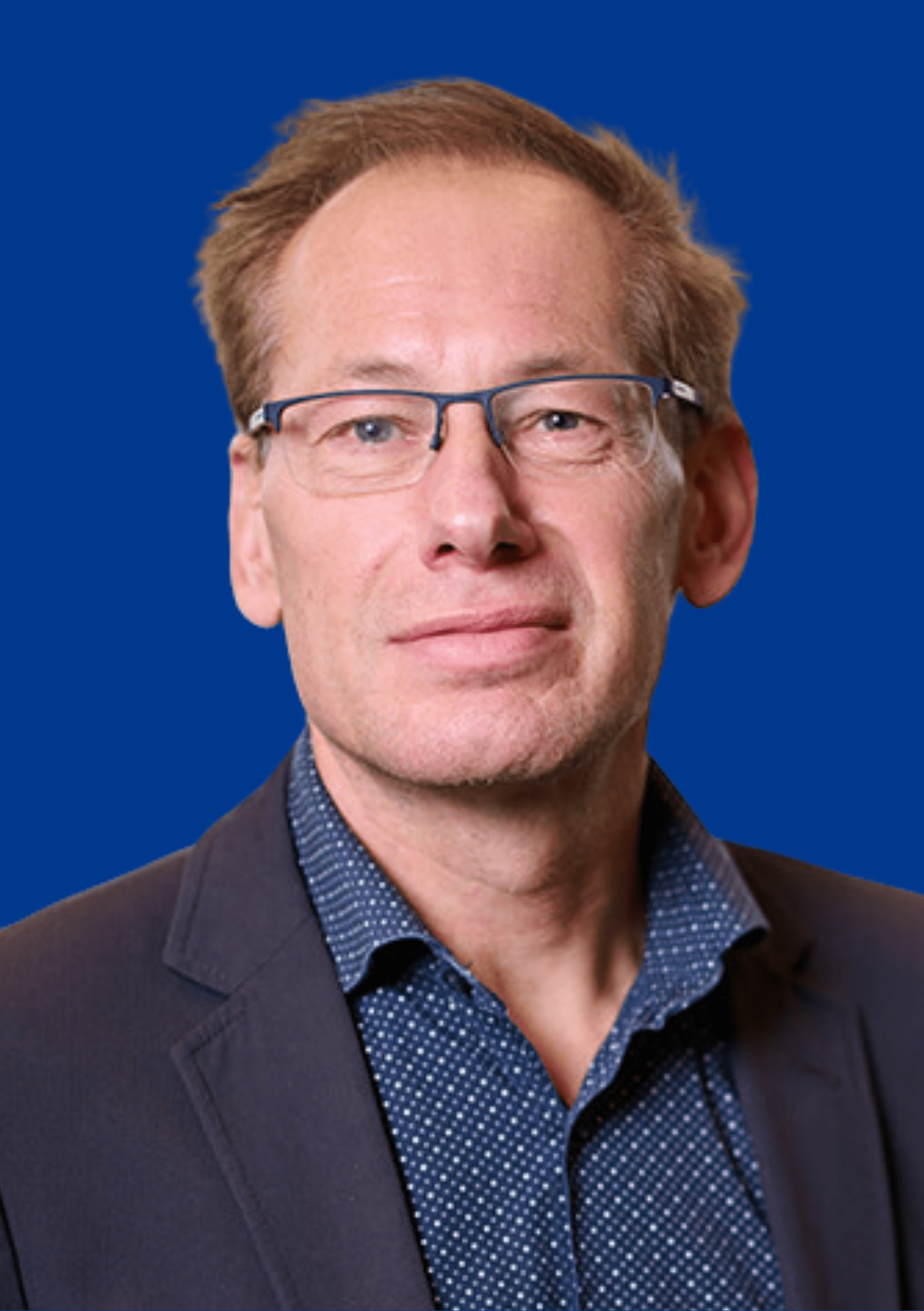
About Frank Staal
Frank Staal is an immunologist at LUMC. His work spans early development choices (including promoter and enhancer selection), building preclinical models, engaging with regulators, and supporting clinical translation through product preparation and immune monitoring after dosing. As he explains, the clinical care is done by physicians, while his team contributes to the product pathway and to detailed immune monitoring to see whether patients regain immune cell populations over time.
Regulatory is a time cost you can manage, but not avoid
On regulatory work, Frank does not argue for shortcuts. He describes it as an essential part of making therapies safe and repeatable. But he is blunt about the cost of treating every programme as a one-off.
“That regulatory mill simply takes four to five years, and it costs a lot of money.”
He links this reality to the practical question that sits behind many early programmes: how to keep momentum while meeting requirements that unfold over years.
His advice is about inclusion rather than speed.
“Talk to regulators as early as possible.”
He positions early dialogue to avoid building a development path that later turns out to be misaligned with what regulators will accept. For early CGT teams, the message is practical: you may not control timelines, but you can reduce rework if you align earlier on what “good enough” will mean for your product and your data package.
The people carrying GMP work need explicit protection
Frank also brings attention to a part of development that is often discussed in technical terms only: the human load of making patient-specific products under GMP conditions. He speaks about the pressure on technicians and teams who know the patient is waiting, and that there is limited room for error. In practice, that pressure can become a structural risk, because fatigue and turnover undermine the very reliability that regulated manufacturing demands.
If you are setting up a team or expanding a process, his implication is that “good” is not only a validated method and a complete batch record. Good also means a team that can keep performing without being pushed beyond what is sustainable. That requires managing expectations upfront, designing backup options where possible, and building a culture where people can signal overload early rather than late.
About Frank Staal’s Group
The Frank Staal group sits within the department of immunology at Leiden University Medical Center, focused on gene therapy approaches for immune disorders. The group’s work is as end-to-end translational: selecting and testing genetic control elements, building and refining preclinical models, preparing for regulatory requirements, and following patients after dosing through detailed immune monitoring. The aim is not only to show that a correction can work in principle, but to understand whether it restores immune function in real patients over time.
Department of Immunohematology - LUMC
2007
Leiden, the Netherlands
T Cell Gene Therapy for Immune Disorders
Planning for success starts before you have it
One of Frank’s strongest themes is that early programmes often plan meticulously for the first trial but leave the next step vague. He describes the moment a therapy works in an academic setting as a transition point that creates a new problem.
“The big problem is what you do afterwards. And that is mainly a financial problem.”
In other words: success does not automatically lead to access, scale, or continuity.
His recommendation is to anticipate that transition while you are still in the preclinical and early clinical phase.
“You never know exactly, but you can already think now about where you ultimately want to go.”
That includes how you will fund the next stage, what kind of partner you might need, and what elements (including IP positioning) will matter once you move from an academic trial to broader availability.
Why Frank’s session matters
This session matters because Frank brings a view across the full chain that many teams only see in fragments: early construct decisions, preclinical modelling, regulatory engagement, the realities of GMP execution, and the long follow-up needed to interpret patient outcomes. He also speaks candidly about the structural bottleneck that appears when a therapy works: not the biology, but the ability to sustain development and reach patients.
For developers, his perspective is useful precisely because it is grounded in what happens after early scientific confidence. “I think we can cure many hereditary disorders.” His interview is a reminder that the limiting step is often not whether a therapy can work, but whether you have built the development, regulatory, operational, and financial pathway that allows it to keep working for more than the first few patients.