
Digital choices that quietly shape CGT organisations: Kees Mensch on digital capabilities in CGT companies
CAR-T therapy is often described as a breakthrough treatment, but delivering it safely and effectively requires far more than a powerful biological concept. At the University Medical Center Groningen (UMCG), clinicians are taking an unusually hands-on approach by manufacturing CAR-T cells within the hospital itself. In this interview, internist-haematologist Tom van Meerten discusses what changes when hospitals take responsibility for production, from manufacturing decisions that shape cell fitness to the operational reality of delivering a one-time therapy. His experience offers a rare inside view of how clinical care, process development, and evidence generation intersect in hospital-based CAR-T programmes.
A one-time therapy forces a different workflow
Tom repeatedly frames CAR T as a treatment that changes how you think about preparation and risk. It is not a chronic intervention you can titrate and adjust. In his words: “It is a one-time treatment where you get one chance to do it right. It’s not like pills where you can give something again every day.” That single-shot reality, in his view, pushes teams toward a different kind of precision, not only in manufacturing, but also in how patients are brought to infusion.
That starts with the patient’s disease state. He describes how some patients arrive with extensive disease, and how teams may need to take time to reduce tumour burden before infusion. The rationale is practical: a smaller disease burden can make the “fight” more manageable for the cells, and it can also reduce toxicity risk. In other words, clinical logistics and biological performance are tightly linked. If you are building or scaling a programme, this becomes a development problem: your product is living medicine, but its first environment is a patient who may not be ready yet.
Manufacturing time is part of the product
A second theme is that manufacturing parameters are not neutral. Tom describes how UMCG started with a longer production process and then concluded it was too long. The reason is biological rather than administrative: time in culture shapes the state of the cells you eventually infuse.
He explains this with an analogy that is unusually concrete for process discussion: “By producing them for a shorter time, they are not running a marathon, but a 1,500-metre race, which means they still have a lot of energy left once they are in the patient.” The point is not style. It is a reminder that “faster” can be a functional choice, not only an operational one. Shortening production can preserve cell fitness, which then becomes a quality attribute in practice, not only a hypothesis on a slide.
This is also where his “in-house” perspective matters. In his view, manufacturing in a hospital is not a symbolic statement about independence. It is a way to learn, iterate, and connect process choices directly to patient outcomes. If you are deciding whether to develop manufacturing capability internally, his interview offers a view of what you gain: the ability to link process development, quality control, and clinical feedback without waiting for an external cycle.
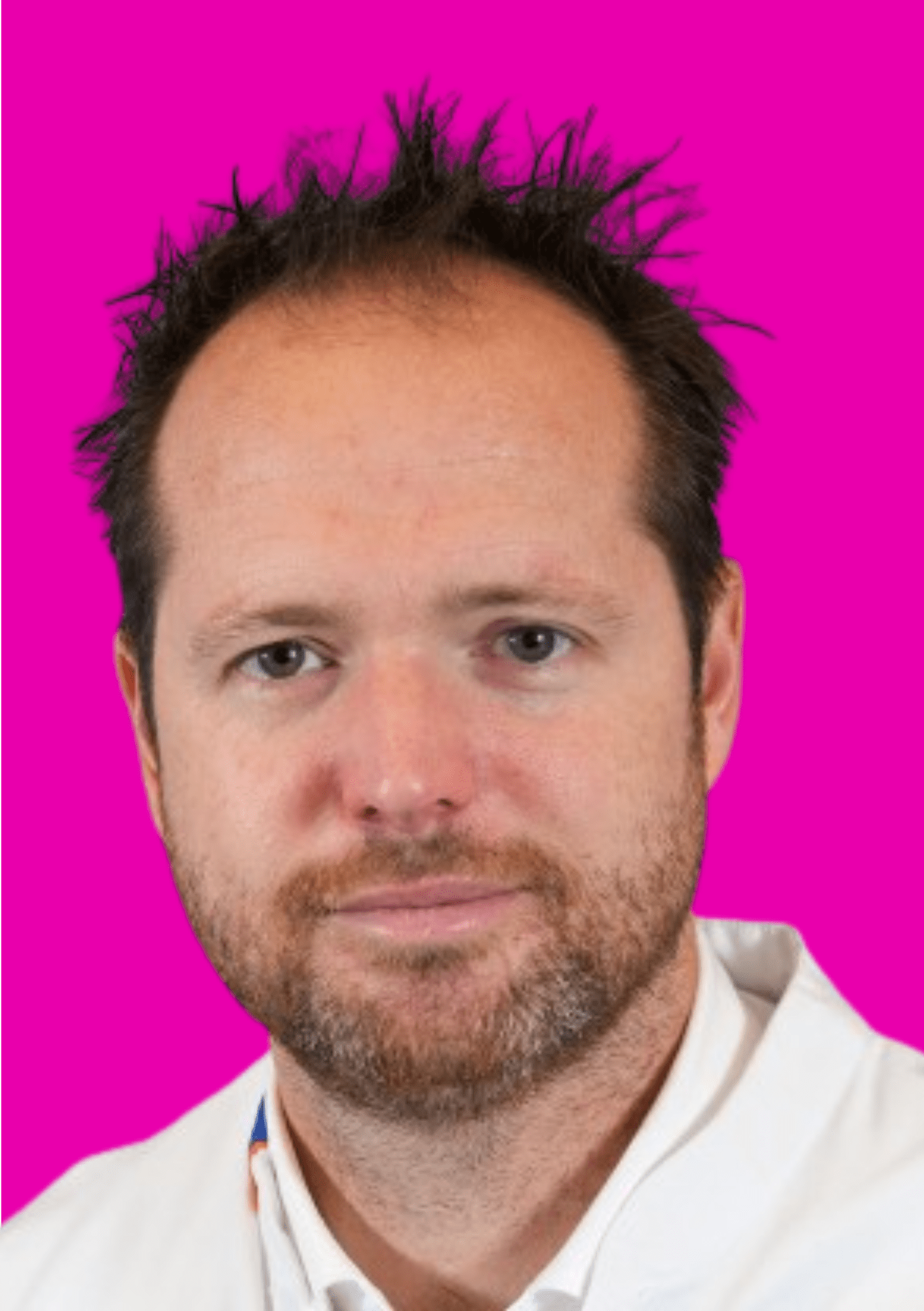
About Tom van Meerten
Tom van Meerten is an internist-haematologist at UMCG. He leads the cell therapy programme in Groningen and chairs the national immune effector cell working group connected to Dutch haematology organisations, focused on CAR T cell therapy. Alongside being local principal investigator for commercial studies, he leads an investigator-initiated randomised trial comparing hospital-manufactured CAR T with a commercial alternative. He also describes translational research activities, including imaging studies using whole-body PET imaging to study how CAR T cells behave in patients.
Evidence is moving toward comparison
Tom is clear that the evidence standards around CAR T are shifting. Early trials were often single-arm studies in patients with no remaining options, and he describes that as logical when the field was new. But as more products become available, the question is no longer whether CAR T can work. The question is whether your CAR T works better, or at least as well, and whether you can prove it credibly enough for registration and reimbursement.
He references this shift directly: “The FDA now advises that single-arm studies are basically done. If you want registration and reimbursement, you need to do randomised studies, either against available CAR T products or against best available care.” That position is not presented as a complaint. It is presented as the new landscape for decision-making. Trial design becomes part of commercial viability, not a separate scientific choice.
UMCG’s randomised study fits that logic: a head-to-head comparison between hospital-manufactured and commercial CAR T. If you are building a programme, the strategic lesson is that comparative evidence is increasingly the price of entry, not a luxury reserved for later-stage organisations.
“New CARs are appearing almost like mushrooms, not only from the air but also from the ground. The field is moving incredibly fast.”
Regulatory engagement is a risk control measure
Regulation, in Tom’s telling, is less about paperwork and more about avoiding avoidable detours. He advises teams to start early with scientific advice and to treat regulators as part of the development pathway, not as an endpoint you visit once you feel ready.
He also offers a candid admission about what happens when you do not. “We did not go to the EMA, and in hindsight I learned we should have done that before starting the study. Now we have to repair many things afterwards.” The details of those repairs are not expanded, but the pattern is clear. Delayed regulatory alignment can turn into later rework, which costs time and morale.
If you are deciding how to allocate attention in an early programme, his argument is that regulatory conversations are not a distraction from development. They are part of development. They shape which data you collect, how you frame comparators, and what pathway remains realistic once you leave the first-in-human stage.
About UMCG
University Medical Center Groningen (UMCG) runs a cell therapy programme that does not only administer CAR T treatments, but also manufactures CAR T products in-house. A lot changes when a hospital takes that responsibility on: product quality becomes a daily operational question, trial design becomes a strategic question, and patient readiness becomes part of the development work.
UMCG
1797
Groningen, The Netherlands
In-hospital CD19 CAR-T therapy
Capacity is built by specialised teams, not by protocols alone
A recurring operational theme is that CAR T is carried by people and systems that take years to build. Tom lists the specialised roles required, from manufacturing and quality control to pharmacists, collection teams, specialised nurses, and physicians trained to recognise and treat toxicities without undermining activity of the cells. His point is that expertise accumulates through repetition, but the system only stabilises once the team stabilises.
That is also why he describes CAR T care as something that should sit in specialised centres. This is not a claim about prestige. It is a claim about safety and execution. The more complex your therapy and logistics, the more fragile the system becomes when it is stretched thin across too many sites with too little experience.
He also touches on how the Dutch system currently routes patients and materials. In the interview, he describes UMCG receiving patient material from other centres, manufacturing the product, and sending it back. The implicit message for developers is that manufacturing models are not only about centralisation versus decentralisation. They are about how you move material, how you assure quality across sites, and whether the ecosystem has enough trained people to sustain the workflow.
Why Tom’s Session Matters
Tom brings a perspective that many CGT developers rarely see in one person: he is both a treating physician and a programme leader in a centre that manufactures CAR T in-house, runs commercial studies, and leads a randomised comparison against an approved commercial product. He also operates at national level through a working group focused on immune effector cell therapy, which anchors his view in how systems are actually built, staffed, and maintained.
He also brings humility that is instructive in a field that can be tempted by premature certainty. “I treated my first patient in 2017, and now, eight years later, we still learn from every patient.” If you are building a therapy, that is not a rhetorical line. It is a reminder that even after implementation, variability remains, and learning remains part of the job.
