
Across the interview, Trimborn keeps returning to the same constraint: even strong programmes can fail to move forward if the financing story is not clear enough, early enough.
He says it plainly:
“Ultimately, the biggest challenge is always securing financing.”
His point is not that science is secondary. It is that capital is the gate that decides whether good science becomes a development plan, a trial, and a product.
That framing matters if you are still early. In his experience, teams often treat fundraising as something that happens once the technical plan is complete. He sees it differently. Financing shapes what you can test, how quickly you can test it, and whether you can keep your team intact through long periods of uncertainty. That is why he talks about fundraising as a craft in its own right, not a one-off pitch deck exercise.
Your science has to fit an investor’s way of thinking
Trimborn argues that part of fundraising is learning to translate scientific work into a narrative investors can process. He makes a blunt observation about incentives:
“Investors think in a certain way: they simply want to make money.”
He is not moralising about that. He is describing the reality founders have to operate within.
That reality leads to practical decisions about fit and timing. He describes how funds differ in cheque size, stage preference, and where they are in their own lifecycle. If you are raising a smaller round, it may be inefficient to focus on funds built to deploy far larger tickets. And if a fund has already deployed most of its capital, you can spend months building a relationship that cannot convert into an investment. His broader point is that many “no’s” are not scientific rejections. They are mismatches in timing, size, or mandate.
“Ultimately, the biggest challenge is always securing financing.”
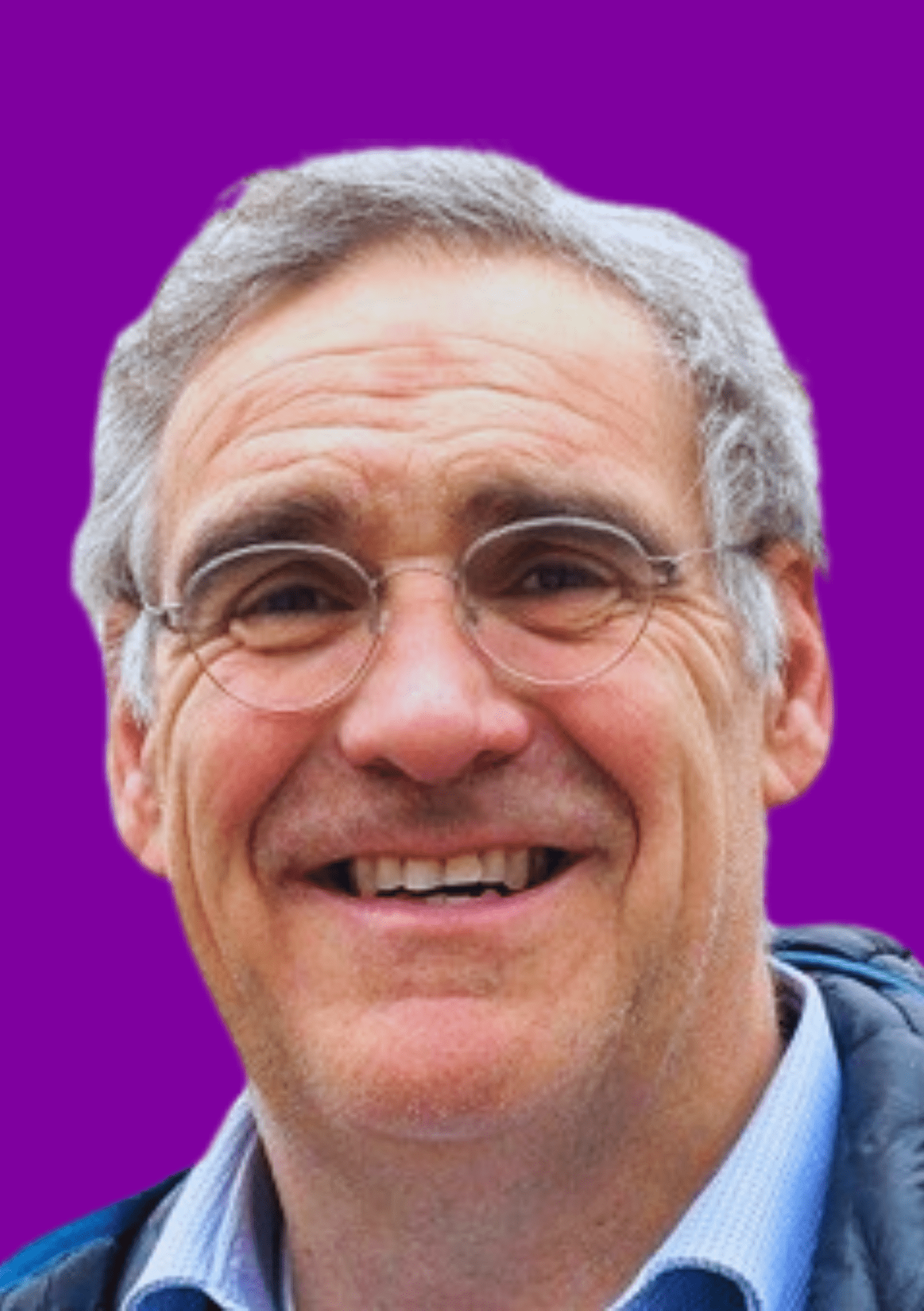
About Tol Trimborn
Tol is trained as a biochemist and molecular biologist. He did his PhD in molecular biology at Erasmus MC and then worked in cancer research in the United States, including at Stanford.
After his academic career, he switched to the investment side, describing time at a life sciences investment firm where he learned “how financial people think about investing in biotech companies,” and characterising it as an “MBA on the job.” He then moved back to building companies and has spent roughly two decades starting biotech ventures, sometimes with universities and professors, and more recently also from ideas developed in-house. Over the last ten years, he has been active in cell and gene therapy, including building and exiting multiple companies.
Mentorship helps, but only if it reduces noise
When asked what he would advise young companies, Tol emphasises learning from people who have done it before. But he is equally clear about the risk of collecting advice without a way to decide. His suggestion is practical and personal:
“I would ask for advice and I would look for a mentor, a buddy.”
The purpose is not validation; it is speed and focus, especially when you are learning fundraising, hiring, and partnering at the same time.
Implicit in his warning is that advice can become a second distraction. If you ask ten people, you may receive ten incompatible answers. A good mentor helps you build a decision system, not just a list of opinions. For early teams, that can be the difference between iterating quickly and drifting between strategies, each adopted too briefly to test.
About CellPoint
CellPoint was built around a practical question in CAR T development: how to make these therapies more accessible by changing how and where they are delivered. In the interview, CellPoint is positioned as a company working on CAR T with a focus on bringing manufacturing and administration closer to the patient, rather than relying only on centralised production models.
Tol discusses the company’s trajectory through clinical proof of concept and its later acquisition by Galapagos, using that path to reflect on what it takes to move a CGT programme from technical feasibility into a durable, scalable organisation.
CellPoint
2020
Oegstgeest, the Netherlands
CAR T therapies for hematological malignancies
Clinical proof of concept changes what the company is
Trimborn’s marker for moving beyond the startup phase is not headcount or the size of the round. It is what happens in patients. In his words:
“When we treated the first patient successfully, that was the moment we truly had clinical proof of concept.” That moment, as he describes it, changes the status of the programme. It also changes what will be demanded next: stronger evidence, clearer differentiation, and more rigorous planning for scale.
He pairs that clinical realism with a caution about preclinical confidence. One line in the interview functions almost like a discipline for the whole field:
“If mouse data translated directly, we would have cured cancer already.” It is not a dismissal of preclinical work. It is a reminder that translation remains uncertain, and that early success needs to be treated as a step, not an endpoint.
After the deal, the culture and the obligations decide execution
Trimborn describes the post-acquisition period as a major shift in operating environment. He talks about the difference between a small team building deliberately and a larger organisation scaling rapidly, sometimes faster than roles and processes can absorb. He points to the need for clear agreements about responsibilities, timing, and duration once the company is no longer fully in control.
For developers, this is a useful reminder that a deal is not only about valuation and milestone payments. It is also a set of operational commitments that can either protect continuity or undermine it. In a field where the work is long and the stakes are high, that clarity can decide whether a programme keeps moving when priorities shift.
Why Tol’s session matters
Trimborn brings a rare combination to a Future of CGT audience: deep familiarity with CAR T development and equal familiarity with the forces that shape whether programmes survive beyond the first strong dataset. His perspective is not motivational. It is operational. It focuses on how financing, investor fit, mentorship, clinical proof, and deal structure interact to determine what actually gets built.
If you are building a CGT company, the value of his interview is that it names the repeatable failure modes that sit outside the lab. The science still has to work. But even when it does, the programme can stall if the financing is not secured, if investor alignment is poor, or if post-deal responsibilities are left vague. His experience puts those risks on the development map early, where they can still be managed.
